Showing posts with label Research and planning. Show all posts

Sunday, 26 April 2015

Locations

Locations to film:


This path will be the ideal location for the opening shots and also a shot to incorporate the urban background. The trees around created a good lighting effect that allowed us to shoot without the light being too bright.


This underpass is covered in graffiti making it good to set up an urban, gritty theme. The lighting had to be natural due to lack of lighting tools so we had to film on a particularly cloudy day so the contrast did not cause confusion.


Davids Lane is a very busy roundabout near an industrial park. This could work well as an establishing or filler shot to reinforce the gloomy feel and tone of the product.


Here at this location in Cuckoo's Hollow nature reserve, will be the concluding part of the opening sequence. It is loosely based on Netflix's The Killing to present influences and further reinforce gloominess.


The house on the left is where our group member Harry lives. He had a garage with good lighting and space for the Alchemy scenes. The garage wasn't regularly visited so there would be no sound contamination. 

List of Locations featured:

Friday, 24 April 2015

Sound

Digetic Sound
Sound whose source is visible on the screen or whose source is implied to be present by the action of the film: 
  • voices of characters 
  • sounds made by objects in the story 
  • music represented as coming from instruments in the story space ( = source music). In final product, we will use a soundtrack similar to the BBC programme Luther. 
Digetic sound is any sound presented as originated from source within the film's world 
Digetic sound can be either on screen or off screen depending on whatever its source is within the frame or outside the frame. 
Another term for diegetic sound is actual sound.

Non-digetic
Sound whose source is neither visible on the screen nor has been implied to be present in the action: 
  • narrator's commentary
  • sound effects which is added for the dramatic effect
  • mood music
Non-digetic sound is represented as coming from the a source outside story space. 
The distinction between digetic or non-digetic sound depends on our understanding of the conventions of film viewing and listening.  A play with digetic and non-digetic conventions can be used to create ambiguity (horror), or to surprise the audience (comedy). 

Another term for non-digetic sound is commentary sound

Tuesday, 21 April 2015

Change in Production Company Name

We have decided to change our production company name. This decision was due to CakeBox seeming inappropriate for our project. 

We have changed the name to Mallard Media where we have linked the footage of a drifting mallard duck in our film project. The name of the company is also a lot catchier and memorable than the previous name. We have developed the logo to appear at the beginning of the film:


Friday, 17 April 2015

Typography


Here is a potential look for the Typography of "Dead End":


The black typography conveys connotations of death which abides by the conventions of crime dramas relating to a murder case or evil intentions. The glass represents crime as many lives are shattered in crime dramas by law breaking scenarios like murder. The simplicity of the title shows a sense of realism to the project. If we were to go with this idea to represent our film, then we would make the glass an animation - shattering and heading towards the screen to reveal the film title.

The simplicity of the font reflects movie titles like Se7en but the shattered technique was loosely inspired by Black Shard.

Friday, 10 April 2015

Costumes & Props

Costume: Costumes are the distinctive style of dress/outfits which usually adjure to a certain genre or . A costume can be a particular style of clothing worn to portray the wearer as a character or type of character other than their regular persona at a social event such as a masquerade, a fancy dress party or in a theatre performance. 

Props: A property, commonly shortened to prop (plural: props), is an object used on stage or on screen by actors/actresses during a performance or screen production In practical terms, a prop is considered to be anything movable or portable on a stage or a set, distinct from the actors, scenery, costumes and electrical equipment. 

Consumable food items appearing in the production are also considered properties. 

Costume ideas for our opening scene: 

Costume for the Alchemist (Keenan) Black Cloak Black Trousers Black Shoes White T-shirt Props for the Alchemist Vials Jars Cat Herbs Pestle Mortar Rocks Jewels Skull Bunsen Burners/Fire Water Books 


Costume for the Jon (Harry) & Pedro (Kieran) Dark coloured jacket Jeans White v-neck Black boots

Wednesday, 8 April 2015

Denonative and Connotative

Connotative - Connotative is when an object or action has a deeper meaning. Usually determined by the symbolism or connotations within a shot.

Denonative - Denonative is when it is obvious what the contextual meaning is of a shot.

Connotative & Denonative analysis of AHS: Coven Promo Poster:Denonative: Three women with a white , magic snake slivering out of all their mouths. The close-up shot is only showing the lower half of the face - making the main focus being the snake & the three mouths. Two women are of Caucasian ethinicity are either side of the one woman of black ethinicity. As a result, makes the black woman appear as the main focus.

Connotative: White snake represents a weaker enemy (i.e. the battle between the voodoos, witches & witch hunters), females' glossy red lips symbolise seduction, black ethnicity of the woman could depict the voodoo clan & the complication of racial topics in New Orleans, Because the snake is slithering from each persons' mouth it could be to show that all of the women are somehow linked (& in the case the women are used to portray the factions within Coven), snakes also have connotations of magic, temptation & the devil; therefore applying a biblical reference to the poster as many people oppress witchcraft as it can be considered to be unholy because Satan took the form of a snake when he tricked Eve into eating the apple; also defying the act of god.

Thriller Demographic

The BBFC sets most thriller films with a rating of 15 which aims thrillers directly at a more mature audience. Most thriller films also have a viewer-ship of 15-40 year old indicating a mature yet conventionally modern audience. 

Thriller appeals to both females and males with the mystery genre being predominantly viewed by women (e.g. Midsommer Murders/Insomnia)  and the action thriller (e.g. James Bond/Jason Bourne). With elements of both conventions, we intend for our film to appeal to both genders while being predominantly aimed at 15-40 year old viewers. Despite this, the largest more select viewer-ship is 15-21 year old views statistically. Therefore, a thriller with a younger cast is likely to attract this core group more rather than the conventional cast age range of 27-70 (with the Da Vinci Code as an example).

Tuesday, 7 April 2015

Issues With Rough Cut


We encountered issues when editing including and particularly audio.
Due to this, several sound clips had to be cut and thus our rough cut needs a lot of work. Also due to the lack of a tripod, we naturally encountered problems with the camera being shaky at times when it needed to be still. 

The feedback we received also stated that some scenes seemed dull due to the lack of titles in them. 

In our next attempt:

  • We will make the camera more stable
  • Increase number of titles
  • Add production company titles
  • Shorten shot lengths to reduce potential to be dull
  • Focus more on the dialogue so other audio elements don't interfere. 

Saturday, 21 March 2015

Taken: film analysis

Taken is a film that is about a retired government agent who has to save his daughter from kidnappers in France. He does this by using his detective skills and mastery of combat to find his daughter and her captors. The shots used in the film are usually close-up shots to give a reaction of the characters, a large amount of establishing shots are also used to show off the location which it is set such as Chicago at the start and Paris later on in the film. 
The film uses a dim lighting to portray a mood of depression and darkness which is why a the end the lighting is far brighter and much more happier mood.

Directed byPierre Morel

Produced byLuc Besson

 Written byLuc Besson
Robert Mark Kamen

Thursday, 19 March 2015

Arrow: TV show analysis

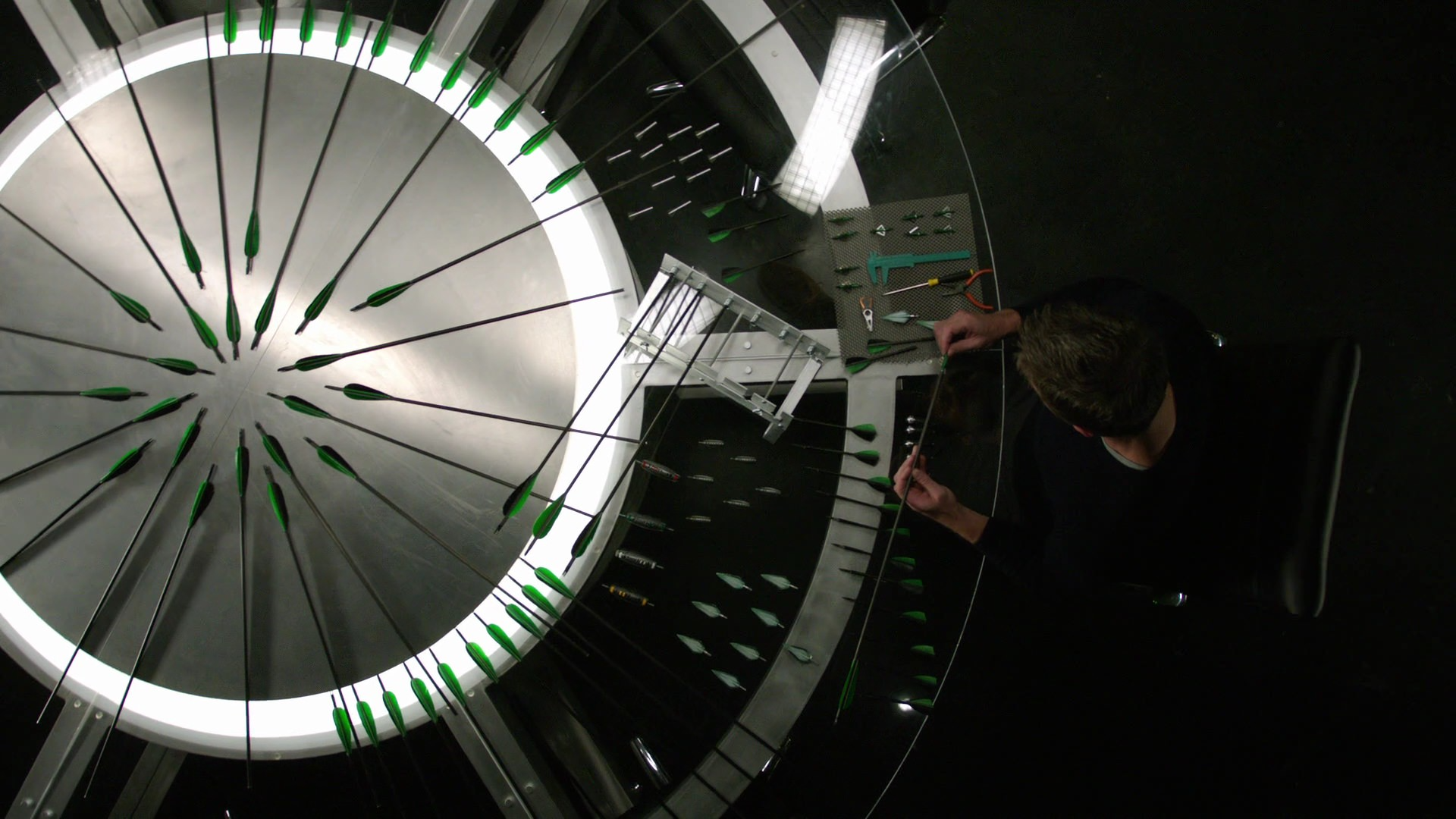
Arrow is a TV series that features Stephen Amell, Katie Cassidy and Emily Bett-Rickards. It follows the life of a "superhero" that his decided to fight the injustice in his city and stop the corrupt rich folk that are causing the cities destruction.


The show uses action and violence to portray a dangerous city that is riddled with crime. The protagonist, Oliver Queen, has been on an island for 5 years away from society.

The TV program consists of Arrow, the protagonist, investigating crimes and solving them using vigilante justice which means that he can operate outside the law.

The lighting is relatively dark to show a unforgiving mood to the show. This is shown by the fact that they are not afraid to kill off characters and the themes of drugs and violence.

The episode usually includes a large amount of action scenes and in this has a wide variety of  stunts in the programme.

The show constantly uses flashbacks as a way to enrich the overall plot and explain some of the back story to the show. Stephen Amell(Arrow) uses monologue from time to time to give the audience a better idea of what is going through the characters head or it is used as a segway to a new scene.


Wednesday, 18 March 2015

Movie Opening Evaluation

As part of the post-production of Films & TV Shows, Titles & Openings are generally used to introduce it. Titles & Openings often communicate with the audience the type of genre the film/show belongs to along with the people associated with it like main actors/actresses, costume design, director, etc.

Game Of Thrones
 Game of Thrones

Game of Thrones's Opening takes the audience on a fantasy-inspired journey throughout Westeros's current state during that season. Landmarks & locations known to the audience begin to form & take shape on the virtual map. The actor's & actress's names appear in the opening sequence next to a picture of their character's house sigil. For example, Maisie Williams's name is next to a picture of a Wolf because her character: "Arya Stark" is part of House Stark & their sigil is a Wolf. The colour pallet is quite natural with whites, greens, blue & browns as they are the colour of the landscape - The white is used for snow, green for grass, blue for the ocean & the brown for rock/desert. Subtle tones of gold are used to convey a sense of regal superiority to tie in with the story of "fighting for the crown to rule Westeros." The final scene where the title is shown on the crown along with four house sigils in each corner shows the main contenders (Stark, Targaryen, Lannister & Baratheon) all are in for a chance of winning "The Game of Thrones." The art style of the visuals paired with the epic, well received music hints to the reader that this show will indeed be a unique, fantasy, battle that the audience will encounter twists & turns with unexpected outcomes - hence the intro showing the building of the locations on the map - you have to guess the outcome of what the outcome is going to be of the construction when first watching (unless you know you already know the geographical aspects of Westeros).   

Monday, 16 March 2015

Thriller Tropes: Protagonist


James Bond was created in the 50's by ex-SIS agent, Ian Fleming. He has been the face of the action thriller genre for over fifty years with each actor to take on the role bringing the character to a then modern audience. The character is the most successful of his kind, spawning a uber-franchise that has arguable kept MGM afloat during financial crisis.  

Classically a sexist dinosaur, he has inspired the creation of similar characters throughout the thriller genre and sub-genres. The Bond-appeal even became a coined term for the thrill of being a spy which is often used to describe both the reality of  espionage and the fictional world of movies.

By all accounts, it is also arguable that James Bond has become an iconic institution of cinema which continues even now (which the latest instalment of the franchise being released later this year). 


Jack Ryan was created by Tom Clancy and spawned a sporadic array of films which included a variety of actors to play the character. Being based on a more modern look at espionage the analyst/operative/president never completely picked up in steam at the box office, however. 

For more information on the Jack Ryan: Shadow Recruit film in particular, refer to the film study. 

Monday, 2 March 2015

Popular Thriller Trope: Location


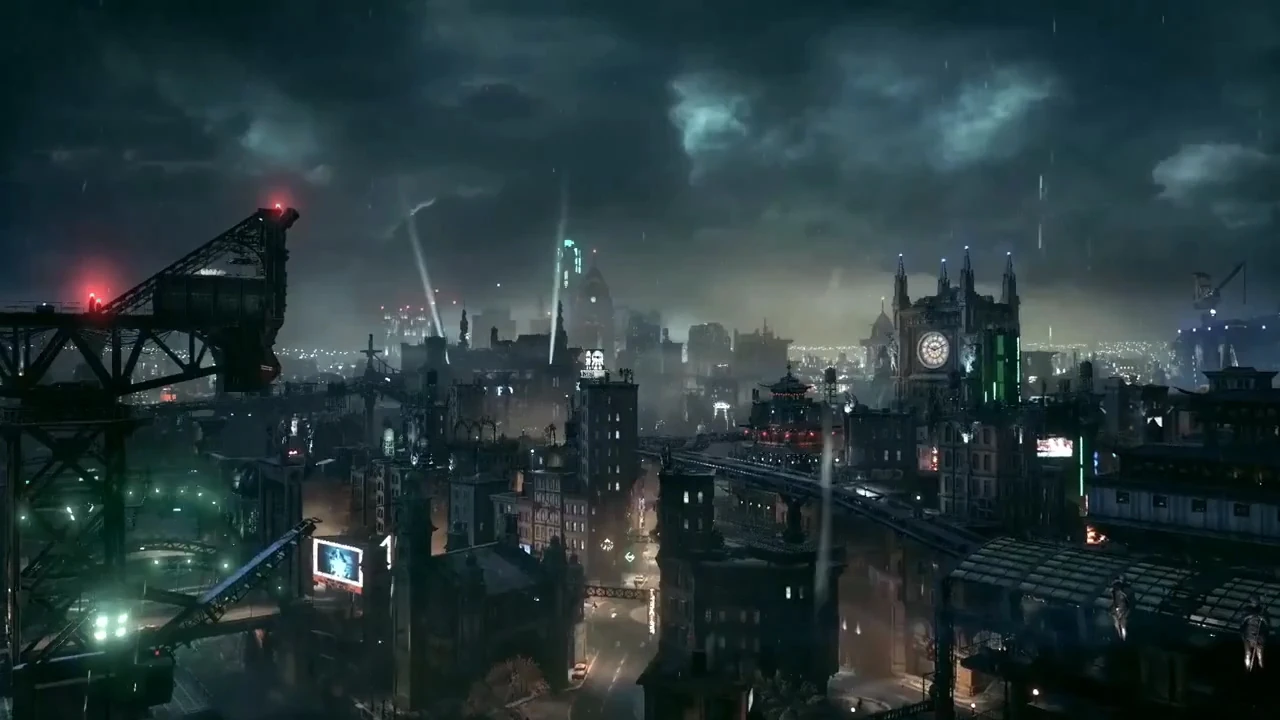
First of the locations is probably the most famous of all crime ridden, thriller-esque locations is Gotham City from the Batman franchise which has been in existence since 1939. It is the set archetype for locations as such and has been shown to be the gritty place where no one wants to live. Such has been the stage for a number of film franchises each visibly taking aspects from the age old creation which itself, has appeared in a number of incarnations (from based on Chicago, New York to a fictional built and in Batman vs Superman, Detroit).


Basin City from Frank Miller's Sin City saga is a secluded city trapped in a basin/sink hole. It was nicknamed Sin City for its noire apparel and violent history. What also adds to the 'rough city' is the predominant red light district where a large portion of the stories to do with Sin City take place. 


The most used location for a thriller is undoubtedly New York. With Gotham being the archetype for a gritty city, it's no surprise that the eponymous TV show is filmed here. With boroughs ranging from the super funded to impoverished - it boasts a wide array of urban enviroments that have been adopted by a number of thriller TV shows such as Elementary, CSI, Blue Bloods etc.

Script changes


When filming, we came to the conclusion it was easier to use the script as guidelines than strict rules. 

We came up with all the dialogue when on set which made the filming much quicker as we weren't restricted by what we had to follow. The one fixed thing, however, was the monologue which is going to be played over the travelling scenes. We compromised the script so the filming could expand and evolve without being restricted. It cut time and also gave us more freedom for what we wanted to do.

As of now, the script is only exists due to the script and the rest is pretty much obsolete now. 


‘Untitled’
By CakeBox Productions

A bleak city landscape. The camera is following a man walking through the grey streets. He is wearing warm clothing indicating winter. Camera pulls focus in and out changing focus from him and the scenery around.

John(aside)-: I always wanted to be a police detective. I don’t know why.
Cut to next shot. Close-up match on action of Jon brushing past a building.
John(aside)-: Maybe it was the TV shows. The good cop always catching the bad guy and he somehow manages to rescue everyone at the end. Cool story.
                Cut to extreme close up of the Bomb Maker tinkering.
Cut back to John. Low angle shot like the camera is behind a car following the approach of John.
John(aside)-: No. It was a nice thought, though. Maybe one day I’ll get given a case where the killer is some idiot with a clear motive, prints at the scene, the works.
                Cut to extreme close up of the Bomb Maker’s mouth area. He slowly smiles.
                Cut to shot of traffic with muffled car noises allowing the monologue to be heard.
John(aside)-: That would be nice before I retire. That old cliché.
Shot of the back of John. He is looking down at traffic on an overpass. The sound of wind and traffic is muffled.
John(aside)-: Long time until that, unfortunately.
                Cut to two-shot. Another person approaches. It is John’s partner, Pedro La Guerta.
Pedro-: John?
John-: Pedro. What d’you need?
Pedro-: You at the station. Someone’s there claiming that they’ve set up a bomb in the city. They’re asking to speak to you personally.
                Close up of John as he replies.
John-: And here I thought that I could have the morning off.


Cut to main titles.


The red highlighted portions show the obsolete sections as the dialogue was revised.
The green highlighted portion shows the cut cues rather than strict instructions so these are open to change. 

Monday, 23 February 2015

A film that inspired our project - Jack Ryan: Shadow Recruit


The film based on Tom Clancy's character once played by Harrison Ford, was released in 2014 as a reboot to the Jack Ryan franchise. Starring and directed by Kenneth Branagh as the arguably trend setting, evil Russian tycoon villain. 

Based on characters created by Tom Clancy and adapted for the screen by Adam Cozad and David Koepp, the film grossed $135.5 million at the box office from a budget of $60 million. 

It brought together currently popular actors such as Chris Pine (Star Trek), Keira Knightly (Pirates of the Caribbean) and Kevin Costner who is a Hollywood A-list veteran.  

Comparatively, the film flopped compared to previous Jack Ryan films such as Clear and Present Danger and Air Force 1. 
 Currently, it is unknown whether there will be a sequel to the film as funding has currently not been confirmed.


Risk Assesment Table

Weather:
Attempt to shoot on a day where there is light but it is cloudy. Use of pathetic fallacy to reflect mood of film.

Careful not fall into lake:
When shooting scenes that require us to approach the lake in Cuckoo's Hollow, do not stand too close to the edge of the brush. Also be sure to not drop the camera in the lake in filming over the bridge or rails.

Neighbourhoods:
Do not make too much noise to disturb people living in the neighbourhood.

Beware of traffic:

Don't get hit by a car.

Beware of passer-bys:
Could accidentally get them in the footage without consent.

Alchemy scene:
Be careful not to cut self on equipment.
Don't drop glass bottles/jars.
Beware of any spillages.

Risk
Consequence
Risk chance
Precautions
Dropping camera while filming
Broken property and inability to film
Low
We will take regular breaks.
Canine interference
Pet dog(s) on set ruins take or post-production sound recording with barking or intrusion.
High
Ensure the dogs are in another location so they do not provide non-diegetic sound.
Road traffic accidents
Injury
Medium
Take standard road safety precautions when encountering roads.
Falling/tripping
Injury
Low
Be cautious when travelling by foot.
Camera breakage due to wind knocking over tripod
Camera is broken and the product is unable to be filmed. 
High
Be vigilant of wind and hold onto tripod and camera at all times..


Monday, 9 February 2015

Popular Thriller Tropes: Villain

A thriller film is often defined by the villain rather than the main character. Their menace/threat that they pose is often the driving force of the film and so they are remembered for that. 
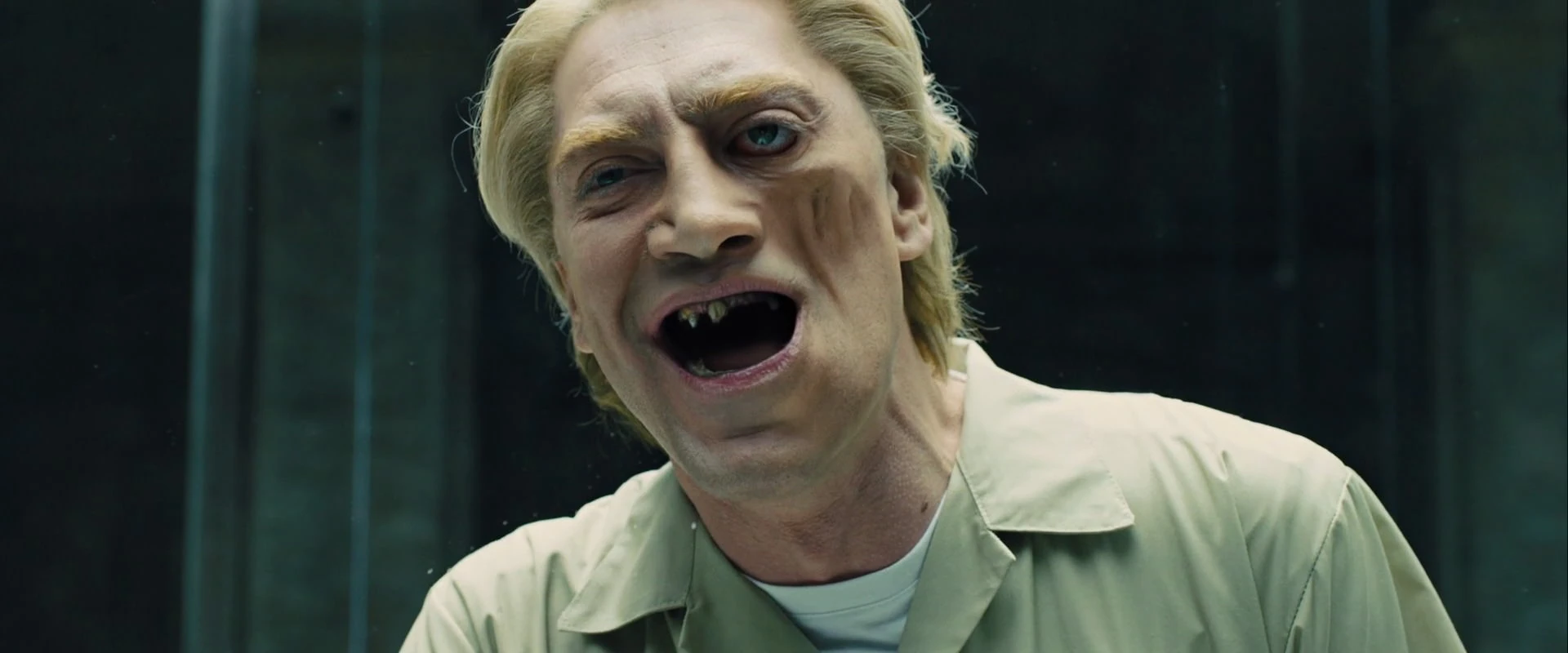
The film Skyfall which is part of the James Bond uber-franchise is remembered for his unique appearance and sheer insanity. 
Despite the plot hole that the character was disfigured by cyanide (which would be impossible), this scene is regarded as a highlight from the film. 


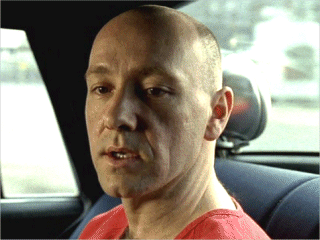
John Doe from Se7en (played by Kevin Spacey) is a methodical religious extremist. 
His crimes in the film are gruesome and horrifying making him a more formidable foe. 
The reality of the character is the most memorable part of his character. It feeds into the fear of the film and the macabre oddity of the mis en scene. 
He as a person, is cool and collective with his face value nature only giving a peak into the super-disturbed mind within.


The xenomorph in Ridley Scott's original horror/thriller, Alien is first and foremost a hunter. 
A monstrous killing machine, the xenomorphs sole purpose is to kill making him/her unpredictable and highly dangerous.
Arguably the greatest villain of all time due to their ferocity, the xenomorph has spawned a whole franchise lasting even now.


Monday, 26 January 2015

TV shows that inspired our project


The Killing (US) is a bleak look at police work and follows a gripping and twisting murder case. The style of it and the simplicity of the scene set ups. It also has very dark themes such as addiction, the abuse of Native Americans, corruption of power and money, and depression. 

The narrative is relatively basic for a murder mystery show but it extends to follow a more realistic narrative where the lines between good and evil becomes more blurry.

The lighting is very poignant as it is all very grey scale adding to the atmosphere of mystery and oddly oppression.


Luther is one of the most focal inspirations for our project as it highlights the tormented lives of people who solve the most heinous murders.

It portrays a deeply troubled individual working on the fringes of acceptable law enforcement. A running sub-plot focuses on this and a task force designed to remove Luther from his job which he does in a controversial unorthodox way.


Supernatural: Shelved

Due to practicality of filming and timing, it was deemed that a parallel script and filming schedule was generally impractical. We also believe that due to our research that we have conducted, we have not encompassed a supernatural element. To this end, we have not seen the potential audience reaction so making a film of that nature will be both painstaking and a risk due to the unknown element. 

In conclusion, the supernatural alternate script has been shelved. We are instead continuing with the crime thriller film that we intended to produce.

Wednesday, 21 January 2015

Spoken Sound

In films, spoken words may take the form of dialogues, monologues, or narration.

Overlapping dialogue can create or reinforce a sense of nervousness, stress, and isolation.

Dialogue is invaluable for revealing a characters ideas, goals, and dreams, though often it does so more concisely, obliquely and revealingly than conversation in life does.